Press releases
View all
The Italian Competition Authority launches investigation into the “Microsoft 365” subscription price increase
Authority concerned that Microsoft may have failed to make it sufficiently clear that its subscription service had been integrated with the “Copilot” and “Designer” artificial intelligence services
The Italian Competition Authority has launched an investigation into Microsoft Ireland Operations Ltd. and Microsoft S.r.l. over an unfair commercial practice relating to the information provided to consumers about the increase in the subscription price for the “Microsoft 365” service. This information appears to have been provided in a fragmented manner, without making it sufficiently clear that the subscription service had been integrated with the “Copilot” and “Designer” artificial intelligence services. Moreover, it seems that consumers were placed, by default, on a new subscription plan at a higher price, unless they exercised their right of withdrawal.
In the Authority’s view, this conduct may be contrary to consumer rules, since Microsoft appears to have failed to provide consumers with sufficient information to assess the changes made to the service offered and, as a consequence, make an informed decision as to whether or not to renew their subscription. The way in which the information was communicated may also constitute an aggressive practice, as it appears to have unduly restricted consumers’ freedom of choice.
Rome, 26 June 2026
E-commerce: the Italian Competition Authority fines Deghi S.p.A. €2 million for unfair commercial practice
The company misleadingly advertised time-limited promotions and discounts, including through the use of a “countdown timer”.
The Italian Competition Authority has imposed a 2 million euro fine on Deghi S.p.A. for engaging in an unfair commercial practice. The Authority found that between January 2024 and the end of December 2025, the company repeatedly used a “countdown timer” to advertise time-limited discounts which, once expired, were renewed under the same pricing conditions with a new “timer”. In doing so, Deghi misleadingly presented the prices and discounts of many products advertised as being “on promotion” on its website https://www.deghi.it/.
The practice is particularly insidious, as it is based on a manipulation technique known as a “dark pattern”: it imposes a fake time limit on promotional product offers in order to pressure consumers to make a purchase, thereby exploiting the so-called “scarcity heuristic”.
Rome, 25 June 2026
The Italian Competition Authority launches market investigation and call for inputs into competition concerns in the motor insurance sector
The inquiry, to be conducted jointly with IVASS, will focus primarily on the functioning of risk allocation systems (e.g. bonus-malus systems and merit classes) and of the direct compensation procedure, as well as on possible barriers to consumer switching (e.g. black boxes and price comparison tools)
The Italian Competition Authority has launched a market investigation to examine possible competition concerns in the motor insurance sector. The investigation will be carried out jointly with the Italian Institute for the Supervision of Insurance (IVASS), responsible for regulating and overseeing the insurance sector, within the framework of the Memorandum of Understanding between the two institutions.
The motor insurance sector is substantial in size, given the mandatory nature of motor insurance and the widespread use of motor vehicles, with premiums of around €13,5 billion in 2025. Over the years, the legal and regulatory framework governing motor insurance has been amended on several occasions, including following recommendations made by the AGCM through its advocacy work. These changes were aimed at making the system more efficient and increasing competition between insurers. However, there may still be some unresolved concerns, which the Authority and IVASS consider should be examined further as part of the market investigation.
The inquiry aims to assess whether, under the current legal and regulatory framework, there are factors in the motor insurance sector that may be hindering the development of competition for the benefit of end consumers. It also seeks as to identify any measures that could address those factors.
In particular, the market investigation will focus on how risk allocation systems (e.g. bonus-malus systems and merit classes) and the direct compensation procedure operate. It will also examine the role of devices that monitor driving behaviour and vehicle activity, such as black boxes, and whether these may hinder consumer switching. The inquiry will further consider how the complexity of commercial offers and discounting practices affect the proper functioning of price comparison tools, including Preventivass.
Alongside the inquiry, a public consultation (Call for inputs) has been launched to gather feedback from stakeholders on the issues at hand, described in greater detail in the decision opening the market investigation. Feedback may be submitted no later than 31 July 2026 at the following e-mail address: [email protected].
Rome, 18 June 2026
The Italian Competition Authority launches investigation into Apple under the Digital Markets Act on the interoperability of Apple’s designated operating systems iOS and iPadOS with alternative consumer clouds
The Digital Markets Act requires Apple to grant third parties free and effective interoperability with hardware and software features controlled via Apple’s iOS and iPadOS operating systems.
The Italian Competition Authority has launched an investigation into Apple Inc., Apple Distribution International Ltd and Apple Italia S.r.l. (hereinafter, “Apple”) over its compliance with the Digital Markets Act (hereinafter, the “DMA”) interoperability obligation that applies to Apple’s iOS and iPadOS operating systems. Pursuant to Article 6(7) of the DMA, Apple must ensure that third-party providers of consumer cloud are granted free and effective interoperability with the iOS and iPadOS operating systems and are given access under equal conditions to the same hardware and software features as those available to Apple’s iCloud.
The Authority has indications that third-party providers of consumer cloud may not be placed on an equal footing as Apple’s iCloud. This is because they appear to lack access to the same features used by or otherwise made available to iCloud. For example, it appears that Apple does not allow alternative cloud storage services to use the iOS and iPadOS features enabling end users to perform a full backup of their devices’ data, while those same features are available to Apple’s iCloud.
This marks the first time the Authority exercises its powers under Article 38(7) of the DMA, specifically conferred on it by Law 214 of 30 December 2023, the “2022 Annual Law on Pro-competitive Reforms” and, in particular, Article 18, “Measures for the implementation of Regulation (EU) 2022/1925 of the European Parliament and of the Council of 14 September 2022 on contestable and fair markets in the digital sector”. Under this Law, the Authority can support the European Commission (hereinafter “Commission”) with preliminary investigations under the DMA. The investigation was launched in close cooperation with the Commission.
The findings of the Authority will be shared with the Commission to support it in its role as sole DMA enforcer.
Rome, 16 June 2026
Italian Competition Authority fines Philip Morris Italia S.r.l. €7 million for unfair commercial practice
According to the Authority, the advertisements mislead consumers into believing the products are harmless to health or less harmful compared to other tobacco products
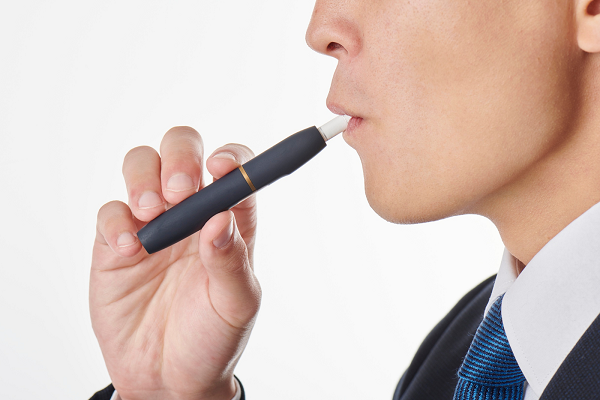
The Italian Competition Authority has imposed a 7 million euro fine on Philip Morris Italia S.r.l. – a company active in the production and marketing of manufactured tobacco products – for engaging in an unfair commercial practice. Following a complex investigation prompted by a complaint from the Ministry of Health, the Authority found that the expressions and claims “smoke-free”, “smoke-free products” and “building/planning/accelerating a smoke-free future”, used as part of a wider marketing strategy for its combustion-free tobacco products, mislead consumers – including minors – into believing that the products are harmless to health and/or less harmful than other tobacco products, particularly traditional cigarettes.
The evidence gathered during the inspections and investigation actually indicates that current scientific and clinical knowledge does not support the claim that these products are less harmful or harmless, not least because of the presence of nicotine.
The Authority has instructed Philip Morris Italia S.r.l. to inform it – within sixty days of being notified the decision – of the measures put in place to bring this practice to an end.
Rome, 10 June 2026
The Italian Competition Authority launches investigation into Volotea for unfair commercial practice
The Authority has also opened an interim measures procedure to put an immediate end to the practice of unilaterally applying adjustments to flight ticket prices based on fluctuations in the price of Brent.
The Italian Competition Authority has launched an investigation into airline Volotea S.L., alongside an interim measures procedure under which the company has the opportunity to be heard (audita altera parte), with a view to requiring it to immediately cease the unfair practice of unilaterally applying adjustments to its flight ticket prices. These changes are notified to consumers only after purchase and shortly before the scheduled departure date.
In particular, Volotea introduced a new ticket sale policy, called Fair Travel Promise, in response to rising fuel costs linked to the situation in the Middle East. The policy provides for a mechanism to adjust flight ticket prices, either upwards or downwards, to reflect fluctuations in the price of Brent. Seven days before departure, the company informs consumers of the fare adjustment to be paid to use the previously purchased ticket, ranging from a minimum of 6 to a maximum of 14 euro per passenger per flight, based on the latest available data on the cost of Brent. Consumers may change their flight, free of charge, or cancel their booking and receive a full refund in the form of Volotea credit. However, if passengers do not pay the fare adjustment, their booking is cancelled and they lose the right to a refund.
In the Authority’s view, this unilateral adjustment of flight ticket prices is in breach of consumer protection rules. On the one hand, it may lead consumers to choose a flight on the basis of incomplete and misleading information – namely, the price displayed at the time of purchase. On the other hand, it may exert undue pressure when, close to departure, consumers are faced with the choice of either paying the fare adjustment or rescheduling their journey, and are therefore induced to accept the change.
Rome, 4 June 2026
Multiple sclerosis medication: the Italian Competition Authority launches investigation into Biogen
Authority concerned that the Biogen group may have pursued a strategy designed to exclude and limit competition from Sandoz, a new entrant, in the market for drugs treating multiple sclerosis containing natalizumab.
The Italian Competition Authority has launched an investigation into Biogen Italia S.r.l. and its parent company Biogen Inc. over a possible abuse of dominant position. The conduct of the two companies appears to be aimed at excluding their competitor Sandoz from offering multiple sclerosis medication containing the active ingredient natalizumab, in breach of article 102 TFEU.
Natalizumab is used to treat patients with rapidly evolving severe multiple sclerosis. For over 15 years, Biogen marketed Tysabri, the only drug (originator) containing natalizumab. Starting from 2024, following the expiry of patent protection, Sandoz attempted to market Tyruko, a biosimilar drug also containing natalizumab, equivalent to the originator, but offered at a significantly lower price. Because treatment with natalizumab may cause a rare side effect, patients are required to undergo a specific test (anti-JCV test) before starting treatment and at regular intervals thereafter, in order to assess the risk of developing PML, a serious central nervous system demyelinating disease.
In the Authority’s view, Biogen holds a dominant position in the supply of the anti-JCV test (named Stratify) because, until 2022, it was the only test authorised for screening and had effectively become the reference standard within the medical community. By leveraging its anti-JCV Stratify test, Biogen appears to be excluding and/or limiting competition from Sandoz in the market for multiple sclerosis drugs containing natalizumab. This is because Biogen makes the use of its test conditional on the purchase of its own drug and refuses to make it commercially available for patients treated with the competing biosimilar.
Moreover, these practices seem to have deprived the National Health Service of the cost advantages associated with biosimilars, since Sandoz’s drug would generate savings of at least 20% compared with Biogen’s originator.
The Authority underlines that these drugs are charged over €1,000 for a single pack, placing a significant burden on pharmaceutical expenditure, and are administered only in hospitals over long treatment cycles. The spread of biosimilars is therefore essential to promote competition, with savings that are crucial for the sustainability of the National Health Service and for funding access to the most innovative therapies for a growing number of patients. For this reason, according to the Authority, strategies that hinder and/or prevent the development of biosimilars, and competition between originators and biosimilars, may breach antitrust rules and seriously affect healthcare expenditure. Protecting competition is thus an essential part of safeguarding the right to health and access to innovative care.
Inspections at the Italian premises of Biogen were carried out yesterday by the Authority’s officials, assisted by the Special Antitrust Unit of the Italian Financial Police (Guardia di Finanza).
Rome, 27 May 2026
Riders: investigations launched into Glovo group companies and Deliveroo Italy S.r.l.
Authority concerned that the companies may have provided misleading information about their ethical commitments and social responsibility towards riders
The Italian Competition Authority has launched an investigation into several companies of the Glovo group (Glovoapp23 S.A., Foodinho S.r.l. and Glovo Infrastructure Services Italy S.r.l.) and a separate investigation into Deliveroo Italy S.r.l. over possible unlawful conducts in the provision of home food delivery services.
In their communications addressed to consumers (e.g. in their codes of ethics and in the “About us” sections of their websites), the companies appear to have promoted a corporate image centred on compliance with ethical and social responsibility standards which may not have reflected their actual practices. This concerned, in particular, working conditions and legal compliance in the management of riders, also with respect to the operating model and algorithm used by the two companies.
Inspections at the premises of Foodinho S.r.l., Glovo Infrastructure Services Italy S.r.l. and Deliveroo Italy S.r.l. were carried out yesterday by the Authority’s officials, assisted by the Special Antitrust Unit of the Italian Financial Police (Guardia di Finanza).
Rome, 6 May 2026
The Italian Competition Authority secures transparent information on “hallucination” risks from AI companies DeepSeek, Mistral and NOVA AI
Authority closes three investigations with commitments aimed at improving transparency around AI systems, including on the websites and apps through which users access the services and at the various stages of the decision-making process before purchase or registration.
In recent months, the Italian Competition Authority has extended its scrutiny of unfair commercial practices to generative artificial intelligence systems. In particular, it has focused on the risk of so-called “hallucinations” – the generation of inaccurate or misleading content. In this area, the Authority conducted three investigations into Hangzhou DeepSeek Artificial Intelligence Co. Ltd and Beijing DeepSeek Artificial Intelligence Co. Ltd (‘Deepseek’), Mistral AI SAS (‘Mistral’) and Scaleup Yazilim Hizmetleri Anonim Şirketi, which offers a cross-platform chatbot service named NOVA AI.
The three investigations were closed with commitments, without a finding of infringement under article 27(7) of the Consumer Code. The companies have agreed to adopt specific measures to improve transparency around the risk of “hallucinations” in their systems. The measures apply to the websites and apps through which users access the services, as well as the various stages of the decision-making process before purchase or registration. Permanent disclaimers have therefore been added below the chat windows in the user interfaces, warning users in Italian about the risk of hallucinations, including through dedicated hyperlinks.
The pre-contractual information has also been expanded and improved through clear warnings that generated content may not always be reliable and should be verified. In the proceedings concerning DeepSeek, the company also agreed to invest in technology to reduce the risk of “hallucinations”, while recognising that current technology cannot prevent them entirely. Lastly, as part of its commitments, NOVA AI agreed to make clear to consumers that its service simply provides a single interface for accessing a number of chatbots (each described in further detail), without aggregating or processing their responses.
Rome, 30 April 2026
Text of the commitments DeepSeek
Text of the decision Mistral AI
The Italian Competition Authority fines Amica Chips, Pata and Preziosi Food over €23 million for anti-competitive agreement
Authority uncovers a cartel among the main Italian producers of savoury snacks sold as private label products. The three companies participated in a market-sharing agreement in relation to the supply of savoury snacks manufactured for large-scale retailers.
The Italian Competition Authority has imposed a fine totalling 23,298,147 euro on Amica Chips S.p.A. (8,239,210 euro), Pata S.p.A. (7,555,387 euro) and Preziosi Food S.p.A. (7,503,550 euro). The Authority’s findings uncovered an agreement restricting competition, in breach of article 101 TFEU, in the Italian market for savoury snacks manufactured on behalf of large-scale retailers and sold through the latter’s own distribution network as private label products.
The three companies participated in a single, complex and continuous market-sharing cartel in relation to the supply of savoury snacks manufactured for large-scale retailers, by coordinating their respective commercial strategies.
The Authority applied its leniency programme and granted Pata and Amica Chips a reduction in fines, in light of the evidence they provided, which was significant in establishing the infringement. Moreover, the Authority resorted to the settlement procedure under article 14-quater of Law 287 of 10 October 1990 for the first time. The successful outcome of that procedure resulted in a further reduction in fines for all three companies.
Rome, 28 April 2026